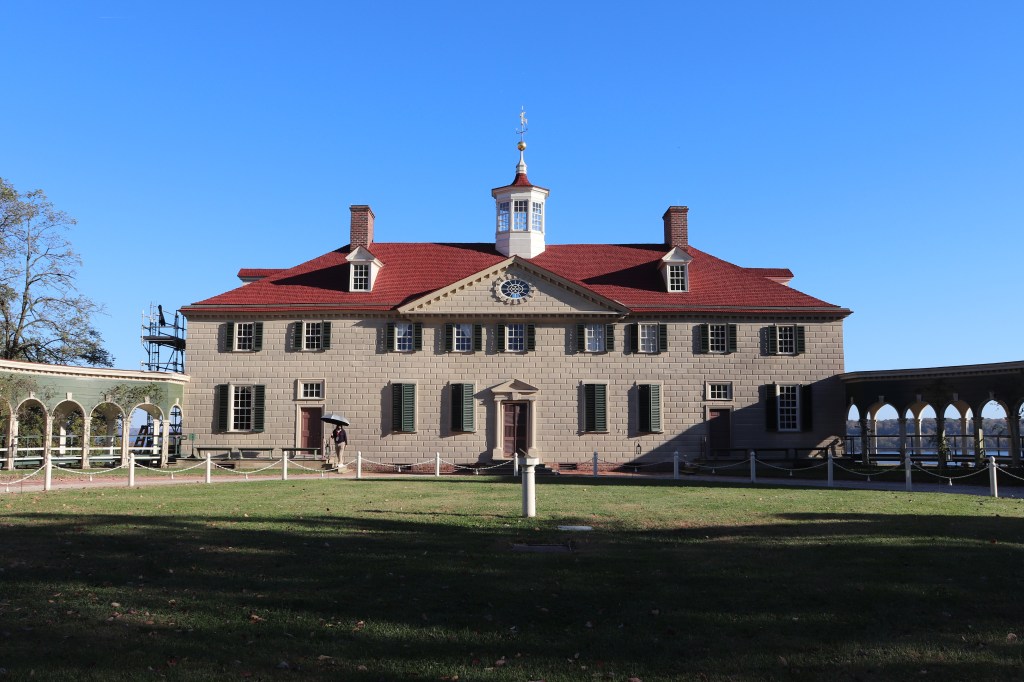
There is a shift away from presenting the stories of famous people as lone iconoclasts. This act is being done by including the stories of the people who surrounded them in their daily lives and how that helped them accomplish all they did. Unfortunately, the facts that surround these wholistic narratives are not always pleasant and, in the eyes of some unacceptably, damage previous binary representations of being worthy of nothing but admiration and praise. Those upset, because their hero is not the shining example that they were taught until now, have the right to be upset as institutions of the public trust spent years telling them a great many lies by omission.
Many will not find this comfortable as it is not a comfortable thing. Some will fear that discomfort. To quote Fyodor Dostoevsky’s Crime and Punishment as translated by Richard Pevear and Larissa Volokhonsky, “It would be interesting to know what it is men are most afraid of. Taking a new step, uttering a new word is what they fear most.” The fact that some will be fearful elevates the importance of museums and historical sites taking new steps and uttering new words in an honest review of our nation’s history.
However, hopefully, those visitors that find themselves face to face with their fear do not find it necessary to use murder to start down the path of self-actualization and improvement like the fictional Raskolnikov. Just saying having an uncomfortable conversation seems like a better route. I find it important to remember that we cannot change for the better without confronting our worst.
What do I fear most about holistic storytelling, particularly in regards to Mount Vernon?
Their implementation of Character Interpreters to represent the enslaved people to the visiting public.
Why?
Because if it is not done with extreme care, more disrespect will befall the memories of the very people they are trying to represent respectfully, and more social harm will fall upon the African American community. To put it bluntly, I fear the accidental recreation of the human zoo. If you are unfamiliar with what I am referring to, please click the following on the link.
https://www.cbc.ca/natureofthings/features/human-zoos-a-shocking-history-of-shame-and-exploitation
There was a Character Interpertor present who talked about his job and the reasons for having them on-site, such as audience engagement and humanizing the people from history in a way that pictures and texts don’t. He talked about his hopes that answering tough questions with facts and response questions inspires some to do research on their own and become more educated about the intersection of slavery and the founding fathers. When asked, he said that they support the staff that plays the enslaved. When they are confronted by someone who “makes comments that have nothing to do with being interested in history,” by which he meant racist remarks, they have every right to break character and walk off without any repercussions. It is a sad fact that no matter how well the interpretations are done, there will always be someone looking for the human zoo.
He talked about how the roles do weigh on the actors even when all goes well. He said they do their best to understand and offer whatever support they need, be it time off or a person to talk to. However, he played the friend and personal physician of George Washington, Dr. James Craik. I would have found it much more insightful to hear from a Character Interpreter who plays an Enslaved Person. I would want to ask what their experience has been? How did they make the choice to take on such a role? What goals do they hope it fulfills as an educational tool for the public? I did find the following somewhat insightful but still wish that I could have had the opportunity to have an in-person conversation with one of their African American Actors.
https://magazine.mountvernon.org/2020/Spring/aa-interpretation.html
My concerns about the handling of the complicated history of Mount Vernon were heightened since they made a serious mistake not that long ago with how they handled memorializing the Enslaved’s Cemetery. They chose to place a sizeable circular memorial on the site where they have found the evidence of the cemetery before using ground-penetrating radar, which was available at the time, to locate all the graves.
The result is that it sits on top of an unknown number of graves, as does the path visitors take to the memorial. They have since done GPR work to locate many graves and have marked them individually with white string. This string blends easily into the gravel path, and along its edges, is a tripping hazard to anyone who walks down it without staying in the exact center. Not many people do as the path was built wide enough to allow groups to pass each other on the way in and out. The result of which is people stepping on the corners of the ill-marked graves. Multiple employees talked about the work being done now to preserve the gravesites. They spoke about there being evidence of an African tradition of marking the graves with handmade personal items left by family members. It is also unfortunate that they have found no records of names saying who is buried here or, in the rare known case, where. They took time to bring up that they are consulting with the descendants of the slaves as they are the most important stakeholders. At this time, there is no plan to excavate any remains, so without DNA studies, it is unlikely that the names of those buried here will be known without a breakthrough records discovery.
I was disappointed that despite their admission that a mistake was made regarding the memorial and the staff’s concerns for telling what the enslaved people’s lives were like, there was no further information offered about the tradition of leaving objects on the graves they labeled; generically “African.” African cultures are extremely diverse, and to mention one practice without any details about which culture or blend thereof to whom it belonged is a disservice to the memory of the Enslaved who toiled the land and worked in the home under the horrid social invention of slavery.
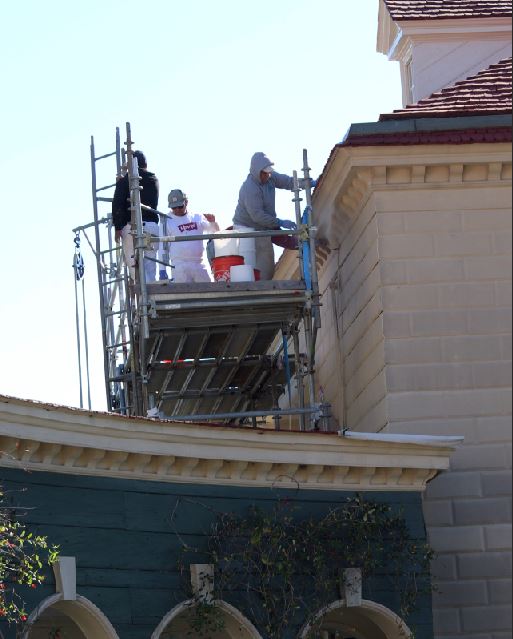
From a future museum professional perspective, I was disappointed that there was very little information provided about the care and maintenance of Mount Vernon aside from the exterior work that was being done. For instance, I could see cracks about every ten to fifteen feet on the retaining wall that restrained the lawn in the front. How do they track this kind of need for maintenance? Do they check it regularly to see if the cracks are changing? The majority of the speakers all went over the same information, which was the history of Mount Vernon and its connection to slavery. Literally, the same information was presented by several speakers in repetition. I do not think they communicated with each other about what topics they were going to present but instead went with what power points they had repaired for others in the past.
Another example of a topic not covered that would have been highly interesting to me would have been about the repairs done to the tomb of George and Martha Washington. But the tomb was only mentioned by the guide in the same way that I was presented years ago when I visited as a tourist. Instead, I had to learn about that from YouTube. This too spoke to an attitude towards our visit that we were just another school class not a mix of current and future museum and cultural history professionals.
I would have loved to learn about how they decided on the wallpaper patterns that they put up in the house but was only told that they were still made by hand. That’s nice, but what was the process used to determine the correct pattern? Again I turned to YouTube to find out that there were scraps sent off to a facility in Savanna Georgia for examination and replication purposes. So I learned nothing that I could not pull off their website or YoutTube channel.
I am not sure what the point of spending a day being a tourist did to help make me a better museum professional. The people that worked there seemed like they were not interested in us past a level that they would any other tour group or were more interested in us critiquing how they were doing than thinking about what kinds of information fellow and future professionals might be interested in. The only exception to this was the Character Actor who wanted to share why he thought they served a real purpose to visitors.
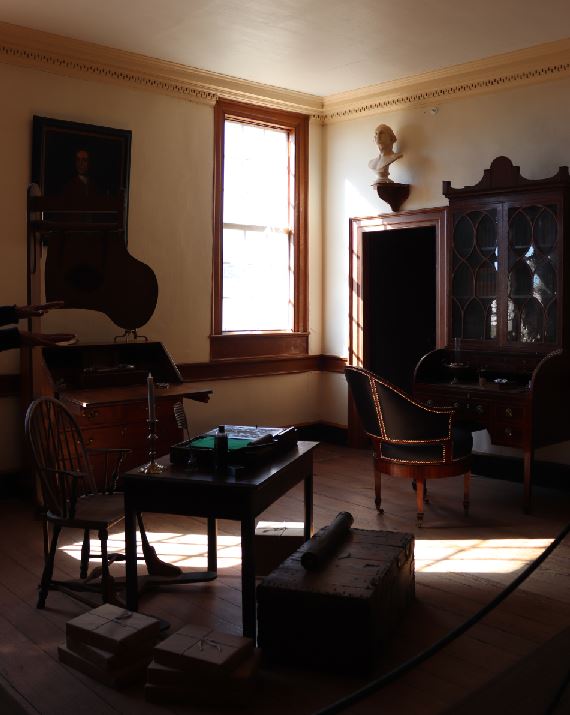
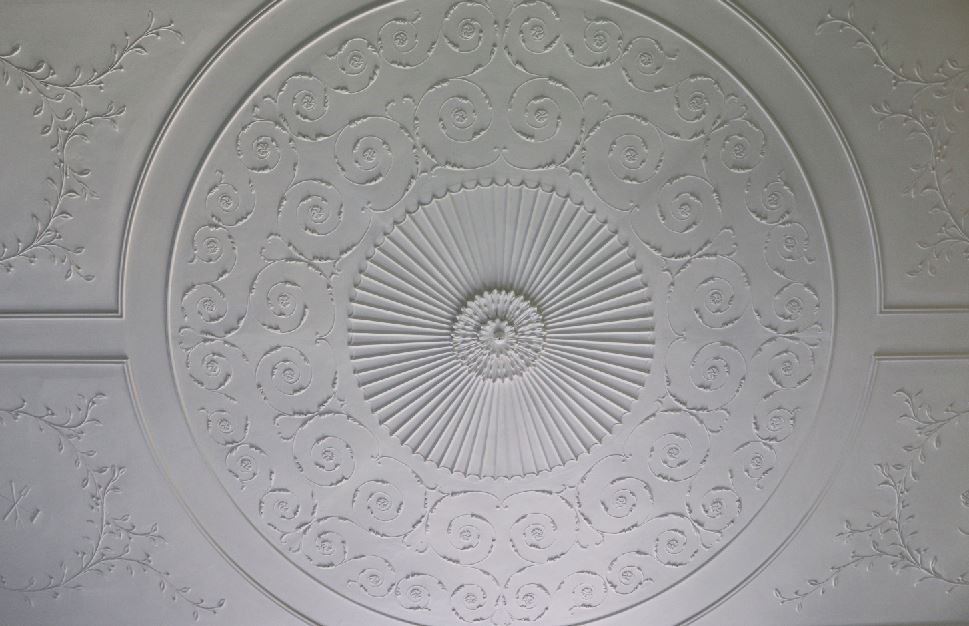
The rest of this post is from the eye of visitor, as that is how we were treated. As I walked through the home, I did not expect to be emotionally moved by anything. I had visited before and remembered Washington’s office and the inclusion of wheat and related farm tools in the home’s plasterwork.
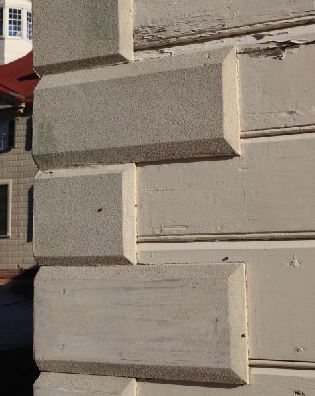
I will say that the linseed oil paint and sand coating process that they have brought back from George Washinton’s directions found in letters to the estate was a surprising change from my last visit.
But one room at Mount Vernon caused me to sympathize with Martha Washington despite her complicated history as an owner (perpetrator) of enslaved people. After George Washington died on December 14, 1799, in the bed that they had shared for over twenty years, she could not bring herself to sleep in that room again and moved into the garret chamber.
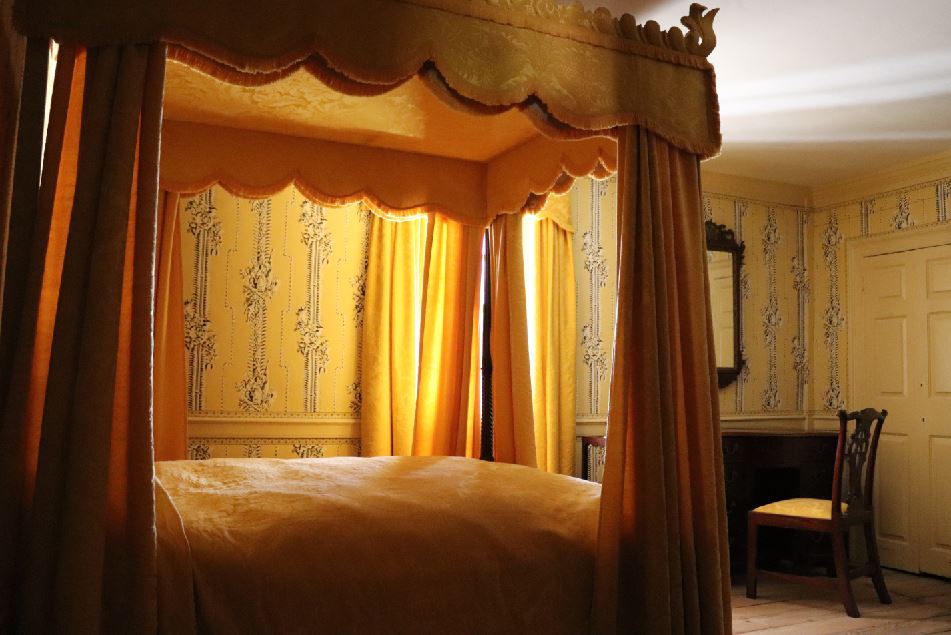
That act struck an emotional chord because when my Husband left for the war, I found myself unable to sleep in our bed. I would lay there for hours trying to distract myself from the fact that I was alone and the real risk that I might be staying alone. Twice, I woke up falling off his side as I had gone looking for him in my sleep. After the second time, I gave up and moved to the couch, where I slept every night for the rest of his first deployment and the entirety of his second. If he had not returned home, like Martha, I would have never again found myself able to sleep in our bed. So, seeing the room that she was driven into by grief was surprisingly difficult and made no less poignant by its beautiful saffron trappings that glowed in the light pouring through the window.

